Tabbed Out: How Splitting Your Attention Between Discord, Twitch, and Twitter Is Wrecking Your Rank
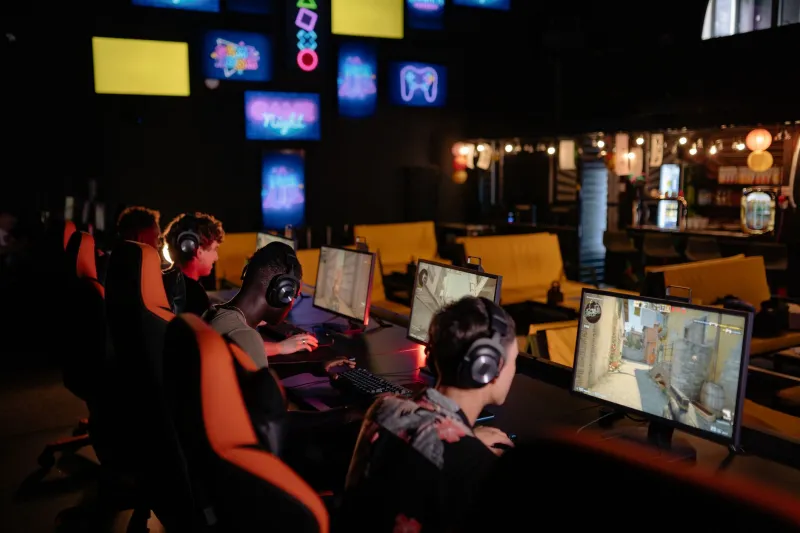
Picture this: you're deep in a ranked match, you've got map control, economy is looking good, and then — ping — your Discord server lights up. Someone's talking trash in the voice channel. Your buddy just went live on Twitch. A pro player you follow posted a spicy take on Twitter. And just like that, your brain is somewhere else entirely.
You die. You blame your teammates. You queue again.
But here's the uncomfortable truth most players won't sit with: the enemy that killed you wasn't on the other team. It was the notification badge in the corner of your screen.
The Attention Economy Is Playing You
Modern gaming doesn't happen in a vacuum anymore. For a huge chunk of players in the US — especially anyone between 18 and 34 — a gaming session also means a Discord call, a Twitch stream running in the background, and a Twitter feed that refreshes every 90 seconds. These platforms are designed with one goal: keep your eyeballs engaged as long as possible. And they're extraordinarily good at it.
The problem is that your brain wasn't built to handle all of that simultaneously, especially during high-stakes competitive play. Cognitive scientists call it dual-task interference — the measurable performance drop that happens when you try to process two demanding streams of information at once. Gaming, at any serious level, is already maxing out your working memory. Add a Discord argument about last night's scrim and you're not multitasking — you're just doing two things badly.
Research published in journals studying human attention consistently shows that task-switching — even briefly glancing at a notification — can cost you anywhere from several hundred milliseconds to multiple seconds of focused recovery time. In a game like Valorant or CS2, where duels are decided in 150–250ms windows, that's not a minor inconvenience. That's a death sentence.
FOMO Is a Real Mechanic (And It's Exploiting You)
So why do we keep doing it? The answer is FOMO — fear of missing out — and in gaming culture, it's particularly potent.
Gaming communities move fast. Metas shift overnight. Drama erupts and dies in a single news cycle. A pro player gets signed, drops, or goes viral before you've finished your warm-up routine. There's a genuine social cost to being the person who didn't catch the tweet, missed the live reaction, or wasn't in the Discord when the big moment happened. Nobody wants to show up to their squad and have zero idea what everyone's talking about.
Platforms like Twitter and Discord actively reward constant engagement. The more you check in, the more you feel like you're part of something. And that feeling? It's addictive in a very literal, neurochemical sense. Dopamine hits from social validation are real, and they're competing directly with the satisfaction you should be getting from actually playing well.
The cruel irony is that the more you chase that social loop during matches, the worse you play — which makes the game less satisfying — which makes you more likely to seek validation elsewhere. It's a cycle, and it grinds your rank into the floor.
What Your Stats Are Actually Telling You
Here's a challenge: pull up your match history and look for patterns. Most tracking tools — Tracker.gg, op.gg, Mobalytics — let you filter performance over time. Now think honestly about which sessions had Discord going full blast, which ones had a Twitch stream playing in the background, and which ones you actually sat down, closed the tabs, and just played.
For a lot of players, the correlation is uncomfortable to look at. Win rate, KDA, objective participation — these numbers often take a measurable dip during distracted sessions. It's not always dramatic, but over hundreds of games, the compounding effect on rank progression is significant.
Decision-making is the sneaky one. Reaction time gets talked about a lot, but the bigger killer is the quality of mid-game calls. When your brain is partially committed to a Discord conversation, you default to autopilot. You make the safe, predictable play instead of reading the situation and adapting. You miss the rotation. You don't call out the flank. You lose the round you should have won, and you're not even sure why.
Practical Ways to Actually Lock In
None of this means you have to become a hermit or quit social platforms entirely. Gaming culture is built on community, and that's genuinely worth protecting. But there's a difference between being part of a community and being consumed by it mid-match.
Set hard session boundaries. Treat your play session like a meeting you can't interrupt. Before you queue, check Discord, catch up on Twitter, see who's live. Give yourself 10–15 minutes to get socially caught up. Then close the tabs and commit to the session.
Mute aggressively. Discord has robust notification controls — use them. Create a "gaming" status that auto-mutes non-essential channels. Most of your friends will understand, and the ones who don't probably aren't helping your mental game anyway.
Put Twitch on a different device or turn it off. Watching a stream on a second monitor while playing ranked is one of the most common and most damaging habits in the community. Background audio pulls cognitive resources even when you're not actively watching. If you want to watch streams, watch streams. If you want to play ranked, play ranked.
Use Twitter's own tools against it. Chronological feed, notification filters, app timers — they exist for a reason. Set a 30-minute daily cap during peak gaming hours and stick to it.
Track your focused sessions. After a few weeks of playing distraction-free, revisit those stats. Seeing tangible improvement in your numbers is one of the most effective motivators to keep the habit going.
The Competitive Edge Nobody's Talking About
Here's the thing — most of your ranked opponents are doing the same thing you've been doing. They've got Discord running, they're half-watching a streamer, they're glancing at their phone. The baseline level of distraction in casual and mid-rank competitive play is enormous.
That means going fully focused isn't just about avoiding a disadvantage. It's about gaining one. The player who is entirely present in the match — reading the minimap, tracking cooldowns, communicating cleanly — has a real, measurable edge over someone who's mentally split across three platforms.
FragZone has always been about playing hard and competing harder. And competing harder doesn't mean grinding more hours. It means being more intentional with the hours you've got. Close the tab. Mute the server. Queue up.
The timeline will still be there when you're done climbing.


