Dead and Watching: How Spectate Mode Turns Your Downtime Into a Competitive Edge
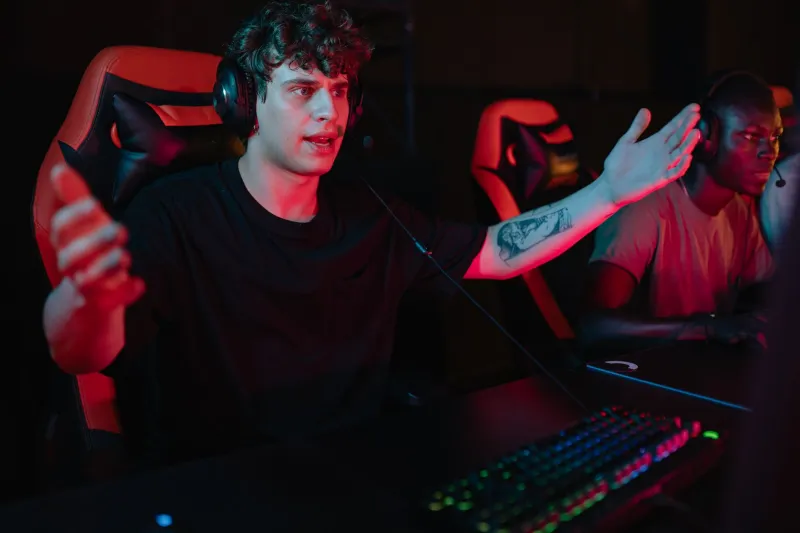
Let's be honest. The moment you get eliminated, your first instinct is to alt-tab, check your phone, or start complaining in Discord. Maybe you're refreshing Twitter. Maybe you're already rage-queuing the next match before this one's even over. Whatever the habit is, it's costing you.
Because here's what the players actually climbing the ladder are doing when they die: they're watching. Closely. Intentionally. Like it's film study before a championship game.
Spectate mode isn't a penalty box. It's a free coaching tool that most players completely waste. And if you learn to use it right, it can teach you more in sixty seconds than ten additional games of grinding.
Why Most Players Spectate Wrong
The average player who bothers to spectate at all is doing it passively. They're watching their teammate run around, maybe laughing at a bad play, maybe getting annoyed. They're not learning anything — they're just killing time.
Passive spectating is basically watching a movie without paying attention to the plot. You're present, but you're not absorbing anything useful.
Active spectating is completely different. It means treating the camera like a coaching eye. You're not watching to be entertained. You're watching to extract data — positioning patterns, rotation timing, sight line habits, resource management, decision-making under pressure. You're watching the game the way a coach watches film, not the way a fan watches highlights.
The difference in outcome between those two approaches is massive.
What to Actually Focus On
When you're spectating a teammate, your brain wants to lock onto the obvious stuff — who they're shooting at, whether they hit their shots. Resist that. The mechanical layer is the least instructive thing you can observe from a third-person view.
Instead, build a mental checklist and run through it every time you swap to a new perspective:
Positioning relative to cover. Is your teammate playing from strong angles or are they constantly exposed? How far from a fallback position are they sitting? This is one of the fastest ways to identify positioning habits you might share without realizing it.
Map awareness and rotation timing. When do they rotate? Are they rotating proactively — before a fight happens — or reactively, which usually means too late? Watch how they read the flow of the match and compare it to how you'd read the same situation.
Resource usage. Are they burning abilities or consumables efficiently, or hoarding them until it's too late to matter? In most competitive games, the players who lose are frequently the ones who died with their kit full.
Communication versus action. Even if you're not listening to voice chat, you can see when a player's movement syncs with their team and when it doesn't. Solo plays that ignore team positioning are a habit. Watch for it in others, then ask yourself honestly if you do the same thing.
The Rotation Read: Your Biggest Takeaway
If there's one thing spectating teaches faster than anything else, it's rotations — specifically, how early or late you need to move to stay competitive in the current match.
When you're alive and playing, you're reacting. You're in the moment, responding to immediate pressure, and your awareness of the broader map is naturally compressed. When you're spectating, you have the full picture. You can see where the third-party is coming from thirty seconds before it arrives. You can see the flank your teammate is about to walk into.
Use that. When you watch a rotation play out — successful or not — mentally track the timing. How early did the winning team start moving? What information triggered the decision? Then file that away. The next time you're alive in a similar scenario, you have a real reference point instead of a guess.
This is exactly how pro players use VOD review and in-game spectating. They're building a mental library of timing windows and decision trees. You can do the same thing in real-time, for free, while your squad finishes the round you just got eliminated from.
Spectating Players Better Than You
Here's a move that requires some humility but pays off fast: when you're eliminated, don't automatically spectate your friend. Spectate the best-performing player in the lobby, even if they're on the other team.
In most games, you can swap to enemy spectate after elimination. Take advantage of that. Watch how the top player is moving, where they're choosing to be, and how they're approaching engagements. You're not going to copy their mechanics in real-time — that's not the point. The point is pattern recognition.
High-level players make the game look predictable because they've internalized the optimal positions and timing windows so deeply that everything flows naturally. Watching them reveals that structure. Suddenly, positions you thought were random start making sense. Rotations you thought were luck turn out to be reads.
That kind of understanding doesn't come from grinding more games in autopilot. It comes from actually studying the game being played around you.
Translating Observations to Your Next Life
All of this is worthless if you don't actually apply it. The bridge between spectating and improving is a simple habit: before you respawn or queue again, name one thing you just observed and one way you'll act on it this round.
Just one. Not a list. Not a vague commitment to "play better." One concrete thing.
"That player was holding the high ground angle thirty seconds before the fight started. I'm going to move to that position earlier this rotation."
"My teammate burned their defensive ability too late because they waited until they were already taking damage. I'm going to activate mine before I push, not after."
This single habit creates a feedback loop that most players never build. You observe, you apply, you see results, you observe again. That's how improvement actually compounds over time — not by playing more hours, but by playing more intentionally.
Stop Treating Death as Downtime
The grind mentality in competitive gaming is obsessed with volume. More games. More hours. More reps. And volume matters, but only if the reps are quality reps.
Spectating with intention is one of the highest-quality reps available to you in any given session, and it's sitting right there every time you die. You don't need a coach. You don't need a replay system. You don't need to pay for VOD review services. You need to stop alt-tabbing and start watching.
The players climbing while you're stuck in the same rank aren't necessarily mechanically better than you. A lot of them are just paying more attention when the game isn't directly in their hands.
Next time you get fragged out, resist the urge to check out. Lock in, pull up the spectate view, and treat the next sixty seconds like the coaching session your rank actually needs.