Gear Envy Won't Make You a Better Streamer: Spend Smart, Grow Fast
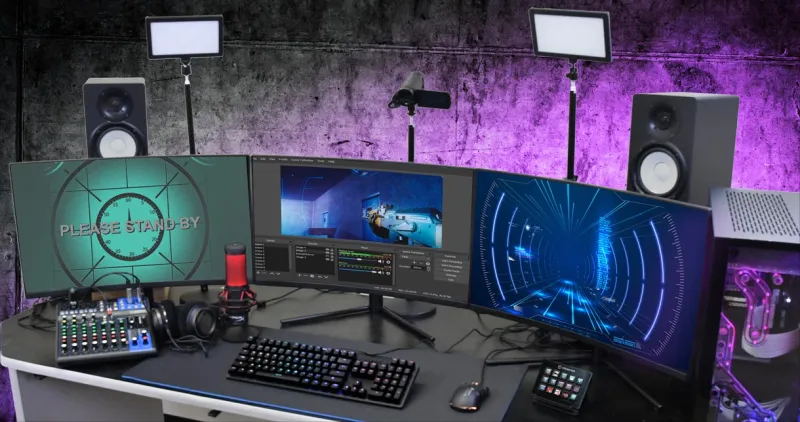
Photo: gaming streamer setup desk with microphone webcam and monitor, via 60a99bedadae98078522-a9b6cded92292ef3bace063619038eb1.ssl.cf2.rackcdn.com
Walk into any gaming subreddit or Discord server and you'll find someone asking the same question: What setup does [insert popular streamer here] use? It's a totally understandable impulse. You see someone pulling 10,000 concurrent viewers on Twitch with a flawless-looking production, and your brain connects the dots — nice gear equals big numbers. Except that math is completely backwards, and it's costing aspiring streamers real money every single day.
Here at FragZone, we've seen this story play out a hundred times. Someone drops $1,500 on a mirrorless camera for their face cam before they've streamed a single hour. Another person buys a $400 XLR microphone but hasn't spent five minutes learning how to properly position it or treat their room acoustically. The gear is sitting there looking great. The stream? Still dead.
Let's talk about what's actually going on — and how to fix it.
The Vanity Upgrade Spiral
The streaming gear market is enormous, and it's built around selling you aspirational products. Brands know that gamers are passionate, competitive, and willing to spend money on things that feel like an edge. That's not a criticism — it's just the reality of the market. But it creates a trap where the idea of streaming well gets confused with actually streaming well.
Here's the hard truth: viewers don't leave streams because your camera is a webcam instead of a Sony ZV-E10. They leave because you went silent for three minutes, because your audio crackles, because you tilted after a bad round and stopped being fun to watch. Those are behavioral and content problems, not hardware problems. No amount of RGB lighting fixes a dead stream personality.
The vanity upgrade spiral usually looks like this: you buy the mic, then decide the webcam looks bad next to it, then upgrade the webcam and realize your lighting is trash, then buy a three-point lighting kit, then notice your green screen has wrinkles, and suddenly you've spent $3,000 and you're averaging eleven viewers — nine of whom are bots.
What Actually Affects Stream Quality (According to Your Viewers)
Let's break down what viewers genuinely notice versus what only you notice.
Audio is king. This one is non-negotiable. Bad audio — meaning distorted, echoey, or inconsistent sound — will end a stream faster than any visual issue. Viewers will tolerate a 720p stream. They will not tolerate sounding like you're broadcasting from inside a tin can. A decent USB microphone in the $50–$100 range, combined with basic acoustic treatment (even just a blanket behind you and a pop filter), will sound dramatically better than a $300 XLR setup in an untreated room.
Stable internet beats fast internet. Your upload speed matters, but consistency matters more. A wired ethernet connection to your router is a free upgrade that eliminates the random packet loss that causes stream stuttering. Before you upgrade any hardware, plug in a cable. Seriously.
Lighting before camera. If you want your face cam to look better, buy a $30–$50 ring light or a simple key light before you even think about a new camera. A well-lit $60 Logitech C920 will outperform a mirrorless camera in bad lighting every single time. Light is the variable most people ignore because it's not as exciting as a camera unboxing video.
Encoding and bitrate settings. This is a software issue that costs nothing to fix. Streaming at the wrong bitrate for your resolution, using suboptimal encoder settings in OBS or Streamlabs, or streaming at 1080p60 when your internet can't handle it — these are the kinds of things that make streams look choppy and pixelated. Spend an hour optimizing your settings before spending a dollar on new hardware.
The Budget-Tier Roadmap That Actually Works
So what should you actually buy, and in what order? Here's a practical framework built around real streaming fundamentals.
Stage 1: The Basics (Under $150 total) Start with a USB microphone like the HyperX QuadCast S or the Blue Snowball iCE. Pick up a pop filter if one isn't included. Use your phone or a budget webcam — doesn't matter yet. Run ethernet. Download OBS and spend time learning it. Stream consistently for 30 days before buying anything else.
Stage 2: Visual Polish (Under $100) Once you've got consistent audio and you're streaming regularly, add a ring light or a key light. The Elgato Key Light Air is popular for good reason, but even a generic ring light from Amazon does the job. This single upgrade will make your face cam look dramatically more professional.
Stage 3: Capture and Camera (Under $200) If you're gaming on console or want to capture footage from a second PC, a capture card like the Elgato HD60 X is worth the investment here. For camera, the Logitech C920 or C922 remains one of the best value webcams on the market and is more than sufficient for most streamers under 1,000 concurrent viewers.
Stage 4: Premium Upgrades (When You've Earned It) Once you're consistently pulling viewers and have a real audience, then it makes sense to invest in higher-end gear. An XLR microphone with an audio interface, a dedicated camera, acoustic panels for your room — these are the upgrades that take a polished production and make it shine. But they're finishing touches, not foundations.
The Real Investment Nobody Talks About
Here's what separates streamers who grow from streamers who quit: consistency, personality, and community engagement. These things cost zero dollars.
Showing up on a regular schedule matters more than your bitrate. Responding to every chat message when you're small builds loyalty that carries you when you get bigger. Learning to be entertaining — to talk through your gameplay, to react authentically, to make your stream feel like hanging out rather than watching a silent playthrough — is a skill you develop by streaming, not by buying things.
The streamers you admire didn't build their audiences with their gear. They built them with their presence. The gear came later, as a reward for doing the work.
So before you open another Amazon tab, open OBS instead. Hit that stream button. Come back to the gear conversation in 90 days when you've got something real to build on.